

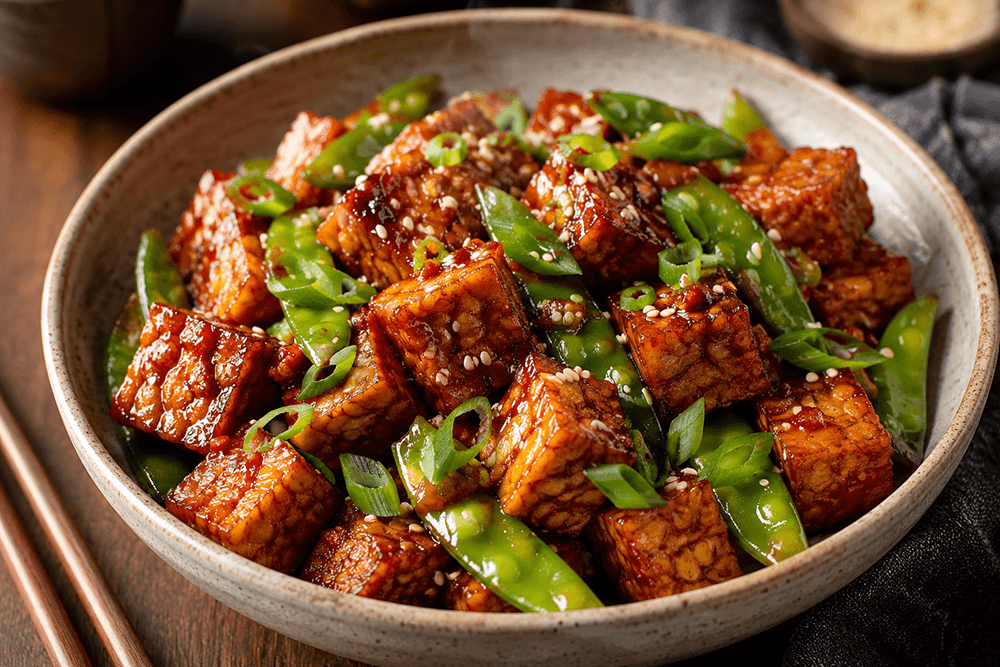
Last night I wanted something warm but unfussy—the kind of dinner you eat with a spoon, head slightly bowed over the bowl while the steam curls up and the glaze catches the light. I cubed a block of tempeh, whisked a quick gochujang situation, and let the air fryer do its quiet magic. A gentle sizzle, edges turning lightly golden, that nutty aroma that always feels like home. While it crisped, I gave snow peas a 30-second bath so their green stayed bright as a traffic light.
This air fryer tempeh with gochujang glaze & snow peas is weeknight-cozy with real flavor: mellow heat, glossy umami, and a crunchy edge that plays so nicely with tender middles. If you’ve got soy sauce, sesame oil, and something sweet, you’re halfway there.
Why You’ll Love This
- Crispy outside, tender inside. The air fryer dries the surface just enough to give a crunchy edge without toughening the center.
- Balanced heat. Gochujang brings savory warmth, not a blowtorch—maple and rice vinegar round it out.
- Green crunch. Snow peas stay snappy and sweet; their fresh bite keeps the glaze from feeling heavy.
- Pantry-friendly and flexible. Plenty of swaps below.
- Meal-prep friendly. Reheats beautifully; the glaze clings on day two.
If anything tastes a touch flat, add a tiny pinch of salt or a squeeze of rice vinegar or lime—trust your palate.
Ingredient Notes & Smart Swaps
Tempeh (8 oz). Choose a block that smells clean and nutty, pale beige with even texture. If tempeh sometimes tastes bitter to you, a quick steam changes everything.
Gochujang (2 tbsp). Korean chili paste with sweet, umami depth and gentle heat. No gochujang? Mix chili sauce with a little miso or mashed fermented soybeans and a drizzle of honey/maple—you won’t get the exact profile, but it’s a good weeknight stand-in.
Soy sauce (2 tbsp). Tamari keeps it gluten-free; coconut aminos if you prefer lower sodium and sweeter notes (reduce the maple slightly).
Maple syrup or honey (1 tbsp). Gives the glaze its shine and those caramel edges.
Rice vinegar (1 tbsp). Brings brightness. Apple cider vinegar or lemon juice in a pinch.
Sesame oil (1 tbsp + a few drops for the pan). Toasty aroma that whispers through the kitchen.
Ginger & garlic (1 tsp + 1 clove). Fresh works best; they bloom in the warm glaze.
Snow peas (1 cup). Trimmed. Swap with sugar snap peas, thinly sliced green beans, or baby broccoli florets—keep the cook short so the color stays bright.
Garnish. Sesame seeds and green onions for crunch and lift.
Step-by-Step (with Sensory Cues)
1) Steam to tame bitterness (optional but lovely).
Ten minutes over simmering water. The tempeh mellows; the cubes feel a bit springy and ready to drink up flavor. Cool briefly so they don’t crumble.
2) Whisk the glaze.
In a bowl: soy sauce, rice vinegar, sesame oil, maple, gochujang, grated ginger, minced garlic. The mixture should look smooth and slightly thick—if you drag a spoon through, it leaves a light trail before settling.
3) Marinate.
Toss steamed tempeh in half the glaze. Ten minutes is enough; meanwhile you can prep the snow peas.
4) Air fry.
Preheat to 375°F (190°C). Lightly spray the basket so nothing sticks. Lay the cubes in one layer—room between them helps the hot air circulate. Cook 14–16 minutes, shaking at the halfway mark. Visual cue: edges turn golden, surfaces feel firm, and you’ll hear a soft tap when pieces knock together.
5) Keep the greens singing.
Blanch snow peas 30 seconds, shock in ice water so the color stays neon bright. Quick sauté 1–2 minutes with a few drops of sesame oil until just tender. You want that juicy snap.
6) Gloss and toss.
Warm the reserved glaze in a small pan over low heat. When tiny bubbles gather at the edges and the sauce looks a touch syrupy, toss in the crispy tempeh. The pieces should sheen immediately.
7) Plate with intention.
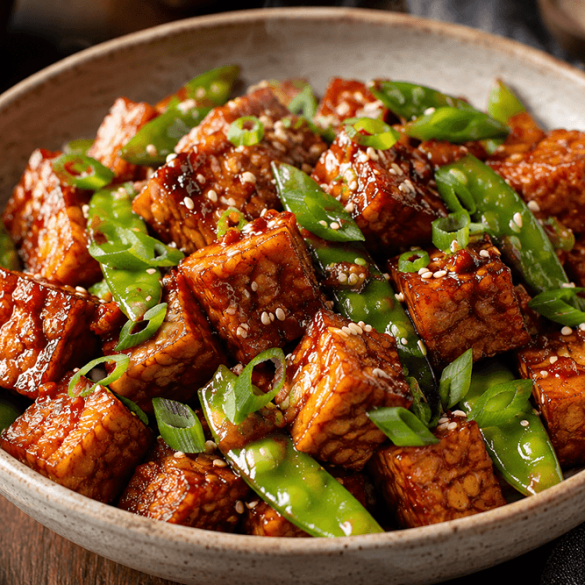
Snow peas down, tempeh on top, sesame seeds and green onions to finish. Little sparks of nutty crunch, a soft oniony lift, and a glaze that clings instead of puddles.
Time & Temperature (Air Fryer Guide)
- Preheat: 375°F (190°C)
- Cook time: 14–16 minutes total for 1-inch cubes, shake once
- Done when: edges are lightly golden and the exterior feels dry-crisp. Add 2–3 minutes if still pale.
Every air fryer runs a bit different (basket size, wattage). Trust the cues your senses give you.
Pro Tips: Ultra-Crispy & Never Bitter
- Dry equals crisp. After steaming, let tempeh air-dry or pat very dry before marinating.
- Single layer. Crowding traps steam and softens edges. Two batches beat soggy cubes.
- Oil, but lightly. A quick spray or thin brush equals “crunchy edge” without greasiness.
- Glaze last. Crisp first, coat second. That’s the path to sticky-glossy without losing texture.
- Rest 2 minutes. Off heat, the crust sets slightly and stays snappy.
Variations & Dietary Tweaks
- Gluten-free: Use tamari and a certified GF gochujang.
- Spicier: Add ½ tsp gochugaru or thinly sliced chili to the glaze.
- Sweeter finish: Drizzle a touch more maple at the end for lacquered shine.
- No air fryer: Roast at 400°F (200°C) for 20–22 minutes, flipping once; then glaze.
Serving & Pairing Ideas
Steamed jasmine rice is classic; the glaze seeps in and softens everything in the nicest way. Brown rice if you want extra chew. Add kimchi for tang or a 5-minute cucumber pickle if you crave cool crunch. A squeeze of lime or a dusting of toasted sesame boosts aroma right before serving.
Storage & Reheat
- Fridge: Up to 3 days in airtight containers (store snow peas and tempeh separately for best texture).
- Reheat: Air fryer at 340°F (170°C) for 3–5 minutes to revive the snap; loosen glaze with a teaspoon of water if needed.
- Freeze: Tempeh (pre-glaze) freezes well for 1 month. Thaw overnight, crisp, then glaze fresh.
Equipment
Air fryer (3.5–5 L), small saucepan, mixing bowl, tongs, skillet for snow peas.
Recipe Card
Tested Batches
- No steam vs. steam: Skipping the steam left a faint bitterness; a 10-minute steam mellowed it and improved marinade absorption.
- 375°F vs. 390°F: At 390°F, edges browned too fast after glazing. 375°F kept the crust crisp without scorching.
- Glaze body: If the glaze won’t cling, simmer 30–60 seconds more—you want tiny bubbles and a thin-syrup consistency that coats a spoon.
FAQs:
Optional, but recommended. A quick 10-minute steam mellows bitterness and helps the marinade soak in.
Preheat to 375°F (190°C) and cook 14–16 minutes, shaking once, until edges are lightly golden and the exterior feels dry-crisp.
Crisp first, glaze last. Warm the glaze until slightly syrupy (tiny bubbles, glossy), then toss right before serving.
It’s medium, savory-sweet heat. Reduce by 1–2 tsp for mild, or add ½ tsp gochugaru for extra kick.
Blend chili sauce with a little miso (or other fermented bean paste) and a touch of maple/honey to mimic that umami-sweet profile.
Use tamari and a certified GF gochujang for gluten-free. For soy-free, try chickpea tempeh and coconut aminos; check chili paste labels.
Yes—400°F (200°C) for 20–22 minutes, flip once, then toss with warmed glaze.
Refrigerate up to 3 days (store greens separately). Re-crisp at 340°F (170°C) for 3–5 minutes; loosen glaze with a teaspoon of water if needed.
Final Bite
There’s a hush when the glazed tempeh hits the plate—the sauce gleams, sesame seeds whisper their nutty note, and the snow peas give that soft snap. Simple, glowing comfort. If you try this, tell me what you swapped—I collect cozy hacks.
Editorial note: This article was fact-checked and technically edited by Chaedar (SEO/Tech Editor). Last updated: .
